


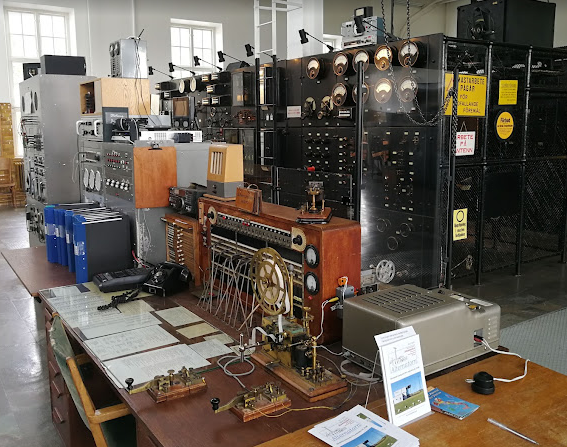
 The idea of receiving the signal transmitted by the Swedish SAQ station near Gothenburg first emerged over a year ago. After my initial attempt using a miniwhip active antenna failed, I decided to try again—this time using a preamplifier described on the Grimeton SAQ Friendship Association website [1] in combination with a magnetic loop antenna. This article presents the results of the experiment together with the technical challenges encountered during its implementation. Inspiration to revisit VLF (Very Low Frequency) reception, along with valuable input during preparation, came from my colleague Jacek Lipkowski, SQ5BPF. Thank you, Jacek.
Antenna Construction
During the first SAQ reception attempt, I used a miniwhip active antenna connected to an RSP1A receiver running SDRUno [3]. The antenna design is described in [2]. In my case, the noise level completely prevented reception of SAQ and DCF-77 signals. Adding common-mode chokes and improving the station grounding did not produce meaningful improvement.
A review of VLF reception techniques shows that loop antennas [7][15] and miniwhips [2] are
among the most commonly used designs. A loop antenna responds primarily to the magnetic
component of the electromagnetic field, making it inherently more resistant to industrial
interference. It also exhibits pronounced directivity, which helps suppress unwanted signals
through proper orientation. In contrast, the miniwhip used during the unsuccessful attempt
responds mainly to the electric field component and is therefore significantly more susceptible to interference from nearby transformer substations and switched-mode power supplies.
The loop antenna was constructed on a rectangular wooden frame measuring 80 × 84 cm (batten thickness 2 cm, shorter side parallel to the ground). The winding consists of 80 turns of 0.2 mm wire wound on plastic guides [11] mounted to the frame (inductance: 24.7 mH, resistance: 61 .). No tuning capacitor is used, as the resonant circuit tuned to the SAQ frequency is incorporated into the preamplifier. Since the antenna dimensions are much smaller than VLF wavelengths, they are not critical; the chosen size was dictated primarily by practical considerations such as portability.
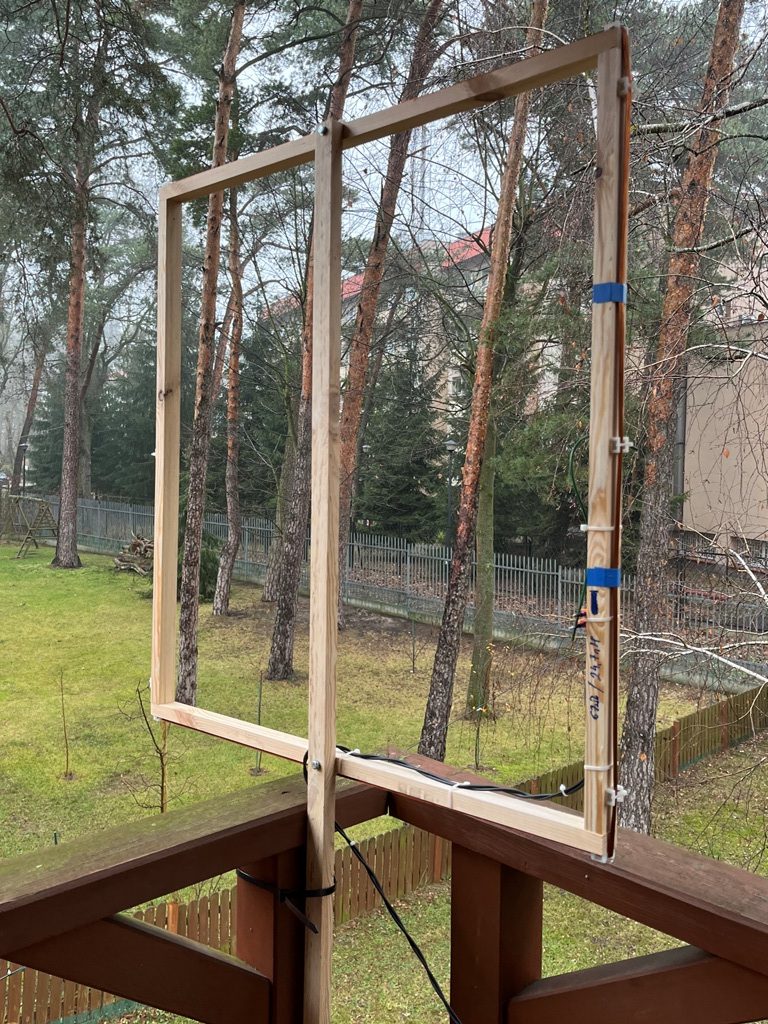
Fig. 1. Mechanical construction of the loop antenna
The choice between a loop antenna and a miniwhip depends strongly on local environmental
conditions. In urban environments with elevated noise levels, a loop antenna is generally
preferable. In quieter locations, however, a miniwhip may deliver better results due to its higher sensitivity. In practice, SAQ reception in urban areas using a miniwhip remains feasible, provided that the local noise level is sufficiently low.
Antenna Orientation Relative to SAQ
Accurate antenna alignment does not require specialized equipment and can be performed
approximately using a smartphone compass application (with “true north” selected if available). In my case, I used GPS Compass for iOS. The antenna site coordinates were obtained from [12], while the required azimuth was read from a map generated at [13].
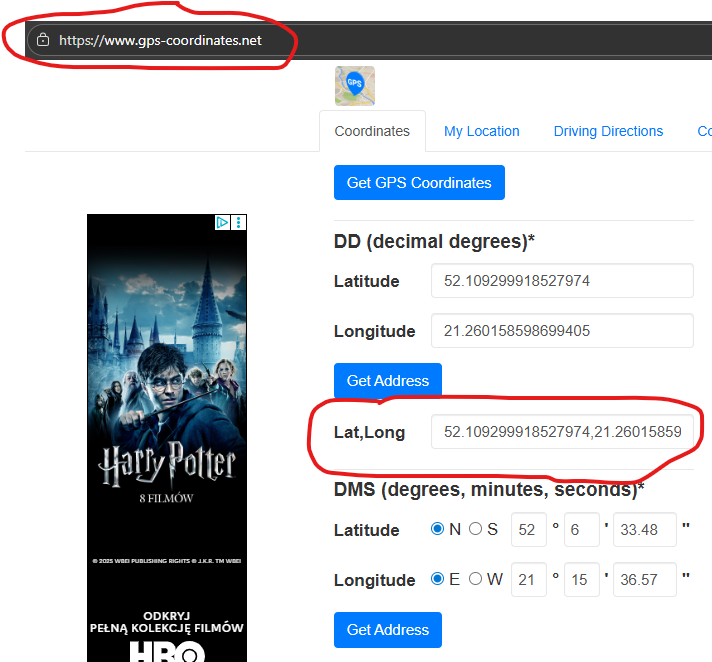
Fig. 2. Website used to determine geographic coordinates.
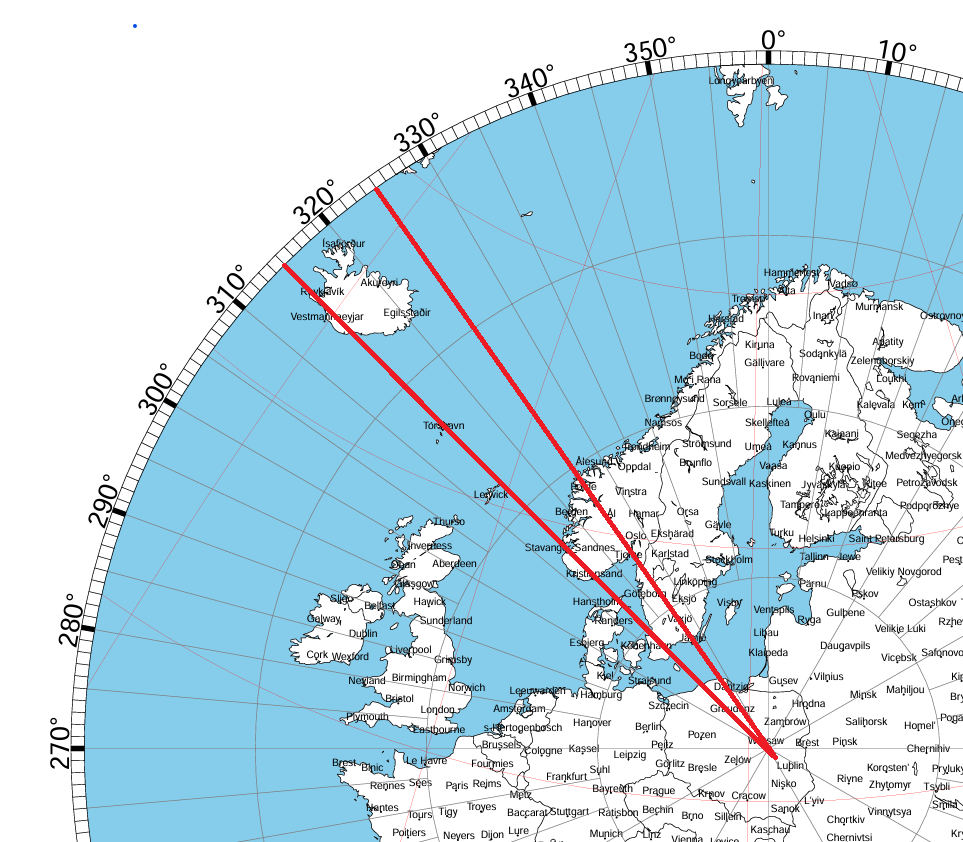
Fig. 3. Azimuth map indicating the antenna pointing direction
If strong directional interference is present at the receiving site, it is advisable to optimize antenna orientation for maximum signal-to-noise ratio rather than maximum signal strength.
Preamplifier Construction
The preamplifier is based on the Analog Devices AD8397 dual operational amplifier [14] and
follows the design described on the Grimeton SAQ Friendship Association website [1][6].
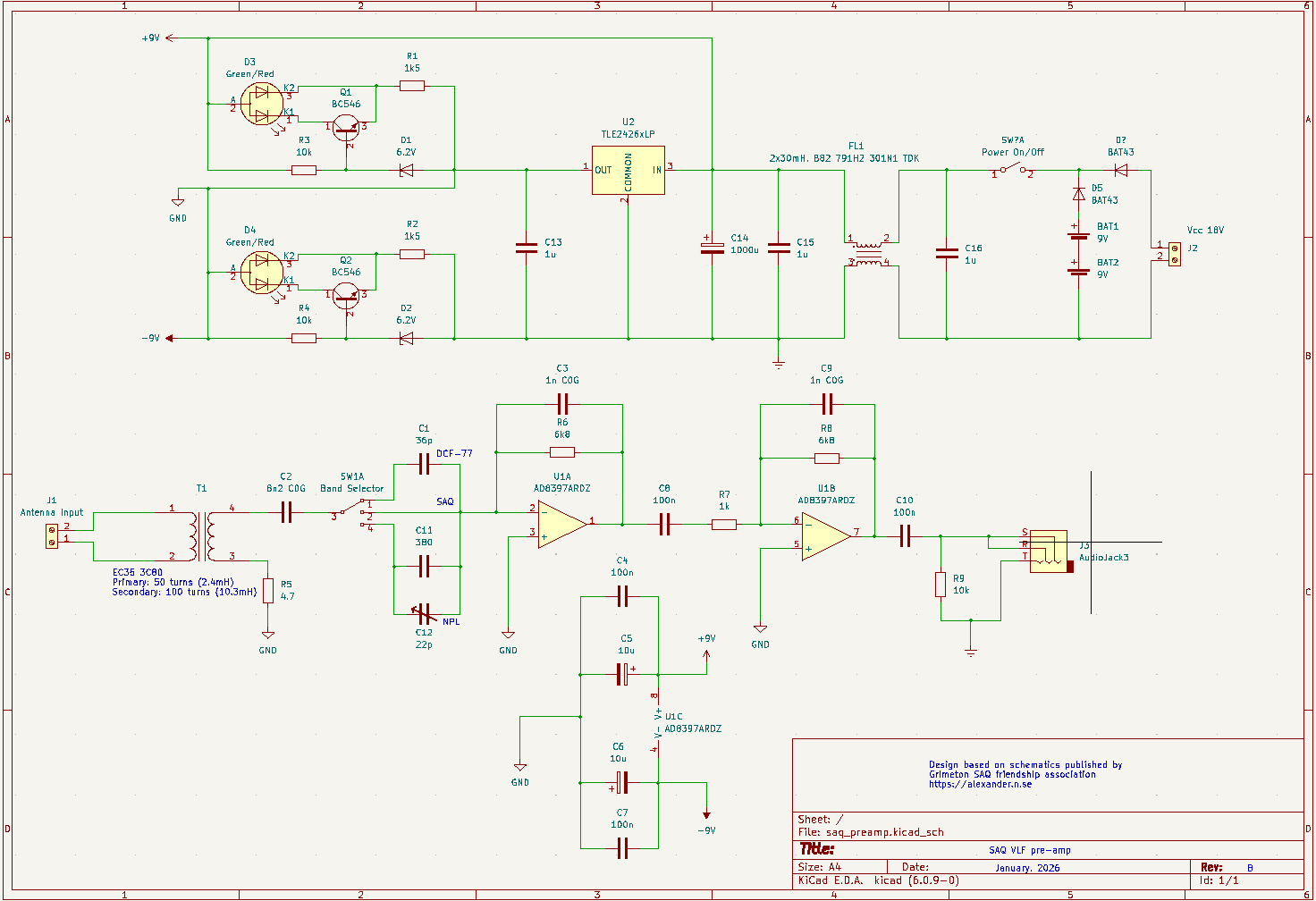
Fig. 4. Preamplifier schematic including power monitoring circuitry
The base design was modified as follows:
1) The 1 µF decoupling capacitors were replaced with parallel combinations of 100 nF and 10 µF capacitors.
2) The secondary winding of input transformer T1 was increased from 90 to 100 turns of 0.2 mm wire.
3) Dodano wyjście SMA-C w celu łatwiejszego przyłączenia odbiornika SDR takiego jak np. RSP1A [3]. W przypadku współpracy przedwzmacniacza z odbiornikiem SDR nie jest wymagany dodatkowy tłumik sygnału.
4) A simple battery monitoring circuit based on a BC546 transistor was added, together with
reverse-polarity protection diodes. When the supply voltage drops below 8.11 V, LEDs D3/D4
change from green to red. The circuit is a modified version of the design described by Einar
Abell on EDN [9].
5) A TLE2426 virtual ground IC was implemented to allow operation from a DC supply (12–18 V). Switching supplies tested during development introduced excessive noise, whereas a
laboratory transformer supply produced no measurable degradation compared with battery
operation.
6) A switch was added to select the input circuit bandwidth between SAQ (center position) and
time-signal bands DCF-77 (77.5 kHz) and NPL (60 kHz). For time-signal reception, capacitors C11/C12 (NPL) and C2 (DCF-77) may require adjustment depending on parasitic capacitances
in the input circuit.
Preamplifier Tuning
Tuning the amplifier to the SAQ frequency (17.2 kHz) does not require specialized measurement equipment. While a function generator and oscilloscope may be used, sufficient accuracy can be achieved by observing background noise amplification with the preamplifier input left open. If the noise peak occurs near the SAQ frequency, the circuit may be considered properly tuned.
The resonant circuit exhibits a relatively narrow bandwidth—approximately 210 Hz in this
implementation—so precise adjustment is required.
When using a function generator, proper isolation from the preamplifier is essential to avoid
resonance shifts caused by switching between the generator and antenna. Practical solutions
include coupling via a short wire antenna connected to the generator output or injecting the signal through a high-value resistor (e.g., 100 k.).
Software
The preamplifier can operate with either a PC sound card or an SDR receiver capable of VLF
reception (e.g., RSP1A by SDRPlay).
For sound-card operation, SAQrx available from the Grimeton SAQ Friendship Association website [1] proved effective, as did Spectrum Lab by Wolfgang Buescher, DL4YHF. Spectrum Lab offers the additional advantage of a waterfall display.
If minimizing local interference is critical, replacing the PC and SDR with a high-quality recorder featuring line input and high sampling rate (e.g., Zoom H1 Essential [10]) may be advantageous. In such cases, operation from a low-noise location is also recommended.
Summary
After a year of preparation, I successfully received the SAQ Grimeton signal. Beyond the
satisfaction of reception itself, the project provided valuable technical experience and
opportunities for knowledge exchange with other VLF enthusiasts.
Given the regular transmissions from SAQ and the possibility of year-round listening in the 10–250 kHz range, the described setup offers a solid platform for further experimentation.
Andrzej SP5GW
References
[1] Grimeton SAQ Friendship Association, https://alexander.n.se/
[2] Antena miniwhip, https://github.com/SP5GW/MiniWhip_Antenna
[3] SDR Play, https://www.sdrplay.com/
[4] Spectrum Lab software by Wolfgang Buescher, DL4YHF, https://www.qsl.net/dl4yhf/spectra1.html
[5] Spectrum Lab settings for SAQ, https://www.qsl.net/dl4yhf/speclab/vlf_rcvr.htm
[6] VLF preamplifier description, https://alexander.n.se/en/the-radio-station-saq-grimeton/lyssna-pa-saq/
[7] Loop antenna operation by William E. Payne, N4YWK, http://www.vlf.it/octoloop/rlt-n4ywk.htm
[8] VLF enthusiasts portal, http://www.vlf.it/
[9] Power supply monitoring circuit, Einar Abell, EDN, March 2, 2015, https://www.edn.com/voltage-indicator-transitions-between-colours/
[10] Zoom manufacturer website, https://www.zoom-europe.com/pl/podreczne-dyktafony/zoom-h1e
[11] Diall STM 4.8 mm cable clips, https://www.castorama.pl/
[12] Geographic coordinate lookup website, https://www.gps-coordinates.net/
[13] Azimuth map generator by Thomas Epperly, NS6T, https://ns6t.net/azimuth/
[14] AD8397 datasheet and LTSpice model, https://www.analog.com/en/products/ad8397.html
[15] Practical guide to building a tuned magnetic loop antenna, Loop Antenna for Very Low Frequency – PhysicsOpenLab
Leave a Comment